

What You Will Learn in This Complete Guide
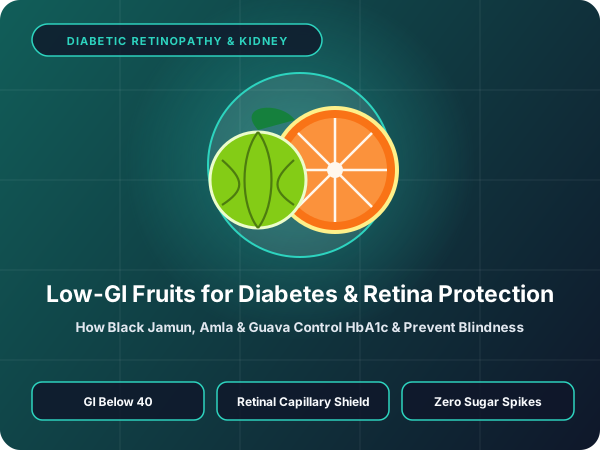
- ✓Diabetics CAN Eat Whole Low-GI Fruits: Whole fruits with intact fiber (Black Jamun, Guava, Amla, Kiwi, Pear, Berries) have a Low Glycemic Index (25–42) and protect retinal capillaries from glycation damage.
- ✓Annual Dilated Fundus Exam Is Mandatory: Every diabetic patient must undergo a dilated retina and OCT macula check once a year at SCEH Daryaganj—even if vision feels 6/6 normal.
- ✓The 150g Paired Portion Rule: Pair 100–150g of low-GI fruit at 11:00 AM with 5 soaked almonds or 2 walnuts to flatten post-meal glucose spikes.
1. How High Blood Sugar Damages Retinal Micro-Vessels (Diabetic Retinopathy)
The retina at the back of your eye has the highest metabolic oxygen demand in the human body and is nourished by microscopic capillaries only one red blood cell wide. When blood glucose (HbA1c > 7.0%) remains elevated, excess glucose enters the polyol pathway, forming Advanced Glycation End-products (AGEs) that kill retinal pericyte cells.
Without pericyte support, retinal capillaries bulge (microaneurysms), leak fluid and lipids into the central macula (Diabetic Macular Edema), and trigger fragile abnormal blood vessels that can bleed into the eye (Proliferative Diabetic Retinopathy).
- •Target HbA1c < 6.8% to 7.0% and Blood Pressure < 130/80 mmHg to halt retinopathy progression.
- •Eliminate all liquid sugars, fruit juices, jaggery (gud), honey, and white maida.
- •Include Anthocyanin and Vitamin-C rich low-GI whole fruits that seal capillary walls.

2. The 5 Best Low-Glycemic Fruits for Diabetic Retina & Blood Sugar Control
Never skip fruits out of fear of sugar—skipping whole fruits deprives your retina of Vitamin C, Lutein, and Anthocyanins needed to prevent capillary leakage. Follow these 5 ophthalmologist-approved low-GI choices:
- •1. Black Jamun (GI 25): Contains Jamboline and Delphinidin anthocyanins that improve insulin sensitivity and strengthen retinal basement membranes.
- •2. Raw Amla (GI 15): 600mg Vitamin C per 100g inhibits aldose reductase (sorbitol accumulation in the diabetic lens and retina).
- •3. Pink Guava (GI 12–24): High soluble pectin fiber + Lycopene slows carbohydrate absorption.
- •4. Crunchy Asian Pear / Nashpati (GI 38): High lignin fiber keeps post-prandial sugar flat.
- •5. Green Kiwi & Strawberries (GI 40): High antioxidant capacity with minimal glycemic load (<4).
Why Targeted Fruit & Superfood Therapy Matters in Weak Eyesight, Cataract, Glaucoma & Retina Care (SCEH Guide)
The human retina and crystalline lens have the highest metabolic rate and oxygen consumption per gram of any tissue in the body. Continuous exposure to blue light, ultraviolet (UV) radiation, Delhi-NCR air pollution, and elevated blood sugar generates reactive oxygen species (free radicals) that cloud the natural lens (Cataract), damage retinal capillaries (Diabetic Retinopathy), and degenerate the macula (AMD).
Clinical ophthalmic nutrition—modeled on the landmark AREDS-2 (Age-Related Eye Disease Study) and patient dietary protocols at Dr. Shroff's Charity Eye Hospital (SCEH, Daryaganj)—focuses on three targeted classes of fruit phytonutrients: macular carotenoids (Lutein, Zeaxanthin, Beta-Carotene), aqueous-humor antioxidants (Vitamin C), and retinal micro-circulatory bioflavonoids (Anthocyanins).
Diabetic Retinopathy Safe vs. Restricted Fruit Glycemic Chart
| Fruit Name | Glycemic Index (GI) | Safe Daily Diabetic Portion | Retina & Metabolic Effect |
|---|---|---|---|
| Raw Amla (Indian Gooseberry) | GI 15 (Ultra-Low) | 1–2 Whole Fruits Morning | Blocks sorbitol cataract & strengthens retinal capillaries |
| Black Jamun & Berries | GI 25 (Very Low) | 100g Bowl at 11:30 AM | Jamboline lowers blood sugar; Anthocyanins protect macula |
| Whole Guava (Amrood) | GI 24 (Very Low) | 1 Medium Firm Guava (150g) | Soluble pectin prevents post-meal glucose surge |
| Crunchy Pear (Nashpati) / Kiwi | GI 38 – 42 (Low) | 1 Medium Fruit with Peel | High fiber + Vitamin C for vascular endothelium |
Top 3 Doctor-Recommended Fruits for Weak Eyesight, Cataract, Glaucoma & Retina Care (SCEH Guide)
Detailed bioactive nutrients, cellular mechanisms, and preparation protocols for each fruit (click any fruit card to open its dedicated monograph):
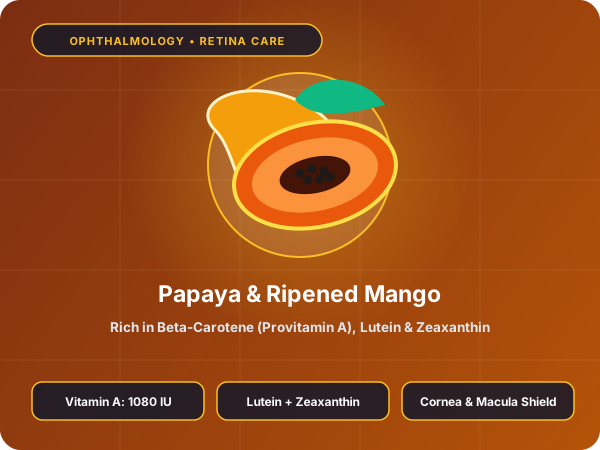
Loaded with Beta-Carotene (Vitamin A), lutein, and zeaxanthin that protect the retina and cornea from macular degeneration and night blindness.
Ripe orange-fleshed papaya and seasonal mango are rich in Provitamin-A carotenoids (Beta-Carotene and Beta-Cryptoxanthin), which the liver and retinal pigment epithelium (RPE) convert into 11-cis-retinal—the essential chromophore of rhodopsin required for low-light and night vision.
Both fruits supply bio-available Lutein and Zeaxanthin, the only two dietary carotenoids that cross the blood-retinal barrier to form the yellow macular pigment in the central fovea. This macular pigment filters out up to 90% of high-energy blue light from mobile and computer screens.
Vitamin A also maintains mucin-producing goblet cells in the conjunctiva, preventing severe dry eye syndrome, corneal xerosis, and surface irritation caused by Delhi smog.
Regenerates rhodopsin visual purple for night vision & prevents corneal dryness.
Builds macular pigment optical density (MPOD) to shield the retina from blue light.
Maintains transparency of the eye's crystalline lens and prevents protein aggregation.
Neutralizes singlet oxygen radicals in the choroid and ciliary body.
Cut 150g of ripe orange papaya into cubes and top with 5 soaked, peeled almonds and ½ tsp roasted flaxseeds. Because Vitamin A, Lutein, and Zeaxanthin are fat-soluble, pairing papaya with healthy fats from almonds increases retinal absorption by 300%.
Mash or finely dice fresh papaya (without black pepper or heavy masala) to provide gentle Vitamin C for corneal incision healing and smooth bowel movement (preventing straining after eye surgery).
Soak 1 ripe Safeda/Alphonso mango in water for 30 minutes before slicing. Eat 3–4 slices as a standalone mid-morning fruit (avoid blending with heavy sweetened milkshakes).
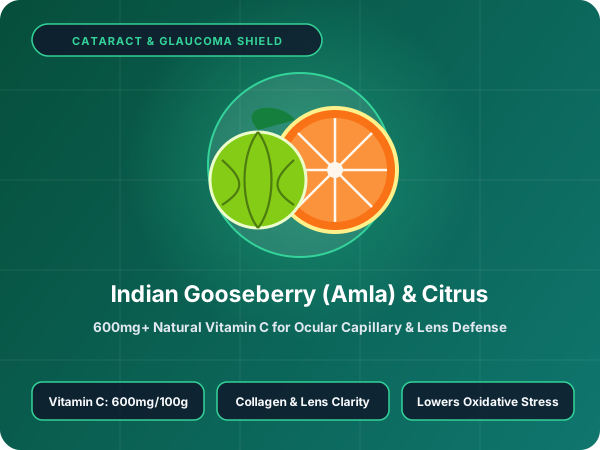
High Vitamin C strengthens ocular blood vessels, lowers intraocular oxidative stress, and slows age-related cataract progression.
The aqueous humor and crystalline lens of the human eye concentrate Vitamin C at levels 20 to 50 times higher than blood plasma. This Vitamin C shield acts as a natural physiological sunscreen, absorbing UV-B rays and preventing lens crystallin proteins from cross-linking into opaque cataracts.
Indian Gooseberry (Amla) contains 600 mg of heat-stable Vitamin C per 100g bound with tannins (Emblicanin A & B), alongside Rutin and Quercetin bioflavonoids that reinforce fragile retinal capillary walls—reducing micro-aneurysms and retinal hemorrhages.
In Glaucoma care, Vitamin C and citrus flavonoids support healthy trabecular meshwork endothelial function and protect optic nerve head retinal ganglion cells against oxidative stress.
Maintains high aqueous humor antioxidant levels to delay nuclear & cortical cataract.
Recycles oxidized Vitamin E and glutathione inside the lens and retina.
Improves ocular blood flow and prevents capillary leakage in diabetic eyes.
Assists retinal alcohol dehydrogenase and insulin sensitivity.
Grate or blend 1 fresh raw Amla in 100 ml lukewarm water with a pinch of roasted cumin (jeera). Drink fresh on an empty stomach for peak ocular ascorbate uptake.
Peel 1 fresh orange or sweet lime and eat the segments with the white fibrous pith intact (where 70% of capillary-strengthening Hesperidin resides). Do not strain into packaged juice.
Lightly steam 2 Amlas for 4 minutes, de-seed, and store in a glass jar. Eat 2 wedges after lunch to aid iron & lutein absorption.
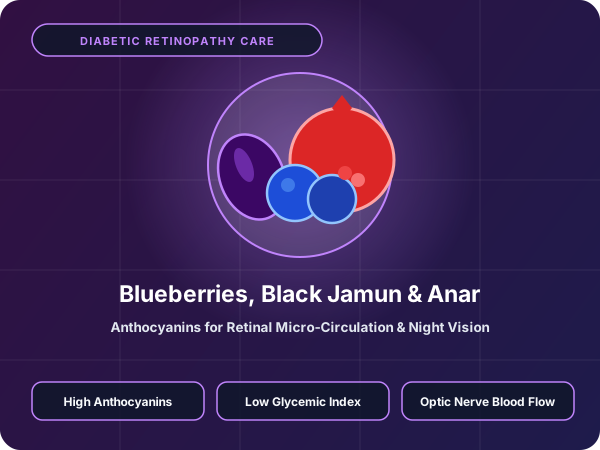
Anthocyanins improve retinal micro-circulation (vital for diabetic retinopathy), speed up dark adaptation, and relieve digital eye strain.
Deep purple-red fruits—Blueberries, Indian Black Jamun (Syzygium cumini), and Pomegranate—are packed with Delphinidin, Cyanidin, and Malvidin anthocyanins. These pigments selectively accumulate in retinal pigment epithelial (RPE) cells and accelerate the resynthesis of rhodopsin after bright screen or headlight glare.
In patients with Diabetes Mellitus (the leading cause of preventable working-age blindness in Delhi-NCR), Jamun jamboline and berry anthocyanins inhibit aldose reductase—preventing sorbitol accumulation and pericyte loss in retinal capillaries.
Regular intake relaxes ciliary muscle spasm caused by prolonged computer/smartphone focus (Computer Vision Syndrome), reducing evening brow ache and blurred distance vision.
Speeds up rhodopsin regeneration and protects retinal ganglion cells.
Inhibits pathological VEGF-driven retinal neovascularization.
Stabilizes post-meal blood glucose spikes that damage retinal micro-vessels.
Protects optic nerve axons against ischemic and glaucomatous injury.
Mix ½ cup fresh pomegranate arils with ¼ cup blueberries (or 8–10 fresh Black Jamuns in monsoon season) and 1 tsp pumpkin seeds (rich in Zinc, which transports Vitamin A from the liver to the retina).
Eat 100g fresh Jamun fruit at mid-morning during summer/monsoon, and take ½ tsp dried Jamun seed powder in water before lunch after consulting your diabetologist.
Eat 1 bowl of fresh red pomegranate seeds (chew seeds lightly for punicic acid) instead of packaged biscuits in the evening.
6-Meal Daily Therapeutic Diet Schedule (7:00 AM – 8:00 PM)
Ocular Antioxidant Wake-Up
🍽️ 1 fresh Amla shot in warm water + 5 soaked peeled Almonds & 2 Walnut halves
Clinical Role: Floods aqueous humor with Vitamin C and Vitamin E before daylight UV exposure.
Macular Carotenoid Breakfast
🍽️ 1 bowl (150g) Ripe Papaya + Vegetable Oats/Moong Dal Chilla with spinach
Clinical Role: Delivers Beta-Carotene, Lutein, and Zeaxanthin with healthy lipids for 3x retinal absorption.
Capillary Bioflavonoid Snack
🍽️ 1 whole Orange or Mosambi (with white pith) + 1 tsp roasted pumpkin seeds
Clinical Role: Strengthens retinal capillaries and provides Zinc to transport Vitamin A to the retina.
Lutein & Omega-3 Balanced Meal
🍽️ 2 Multigrain Rotis + Palak/Methi Dal + Carrot-Beetroot Kachumber Salad + Curd with 1 tsp ground Flaxseeds
Clinical Role: High macular lutein density + Omega-3 tear film stabilization against dry eyes.
Anthocyanin Vision Refresh
🍽️ 1 cup Pomegranate arils / Black Jamun / Blueberries + Green or Chamomile Tea
Clinical Role: Relieves ciliary muscle digital eye strain and boosts retinal blood flow.
Low-Glycemic Recovery Dinner
🍽️ Vegetable Daliya / Grilled Paneer or Fish + Lightly steamed Broccoli & Bell Peppers
Clinical Role: Prevents nocturnal glucose spikes and supports overnight corneal epithelial repair.
✅ Daily Healing Superfoods to Include
Spinach delivers 12,000+ mcg of Lutein & Zeaxanthin per 100g—the highest of any food—while carrots supply Beta-Carotene.
Traditional Ayurvedic optic nerve tonic rich in Vitamin E (alpha-tocopherol), riboflavin, and cooling essential oils.
Plant-based Omega-3 (ALA) fortifies the lipid layer of the tear film, preventing evaporative dry eyes and Meibomian gland dysfunction.
Glaucoma ('silent thief of sight') and early Diabetic Retinopathy have zero early symptoms until detected via OCT and fundus exam.
⚠️ Foods & Habits to Strictly Avoid
Clinical Risk: Spikes HbA1c, causing osmotic lens swelling (myopic shift), premature cataract, and proliferative diabetic retinopathy.
Clinical Risk: Doubles the risk of Nuclear Cataract and increases Age-Related Macular Degeneration (AMD) risk by 400%.
Clinical Risk: Clogs choroidal micro-vessels and worsens Meibomian gland blockage in chronic dry eye patients.
Consult Top Ophthalmology Doctors & Flagship Center
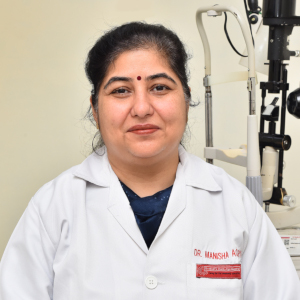
Recommended Tertiary Center: Dr. Shroff's Charity Eye Hospital (SCEH - Flagship Daryaganj) (5027, Kedarnath Road, Daryaganj, New Delhi - 110002 (Official: sceh.net)) • 24×7 Emergency: 011-43524444 / 43528888







Frequently Asked Patient Questions
Q: Can Jamun seed powder really help control blood sugar in diabetic eye patients?
Yes, sun-dried Jamun seed powder (½ tsp with warm water before meals) contains the glycoside Jamboline and ellagitannins that inhibit salivary and pancreatic alpha-amylase, reducing post-meal glucose spikes alongside your prescribed diabetes medication.
Q: Can eating papaya, Amla, and carrots remove my spectacle number completely?
While fruits cannot alter the axial length of the eyeball once refractive error (myopia/hyperopia) is established, a diet rich in Vitamin A, Lutein, Zeaxanthin, and Vitamin C prevents further retinal weakening, eliminates accommodative eye strain (pseudo-myopia), protects against dry eyes, and slows cataract and macular degeneration by 25–35%.
Q: Which fruits are safe for patients with Diabetic Retinopathy?
Patients with Diabetic Retinopathy should choose low-glycemic, anthocyanin- and Vitamin C-rich fruits: Indian Gooseberry (Amla), Black Jamun, Guava, Blueberries, Pomegranate (1 small cup), and Orange segments, while avoiding fruit juices, canned fruits, and overripe bananas.
More Evidence-Based Health & Diet Guides
View All Articles →
Dr. Shroff's Charity Eye Hospital (SCEH Daryaganj - sceh.net): Complete Patient Guide, OPD Timings & Specialties
Best Fruits for Eyesight, Retina Protection & Preventing Cataract Naturally

Top Super-Specialty Hospitals in Delhi, Gurgaon & Noida for Eye, Heart, Ortho & Gastro Care